



Profile
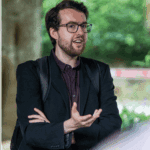
Alex Baxendale

-
About Me:
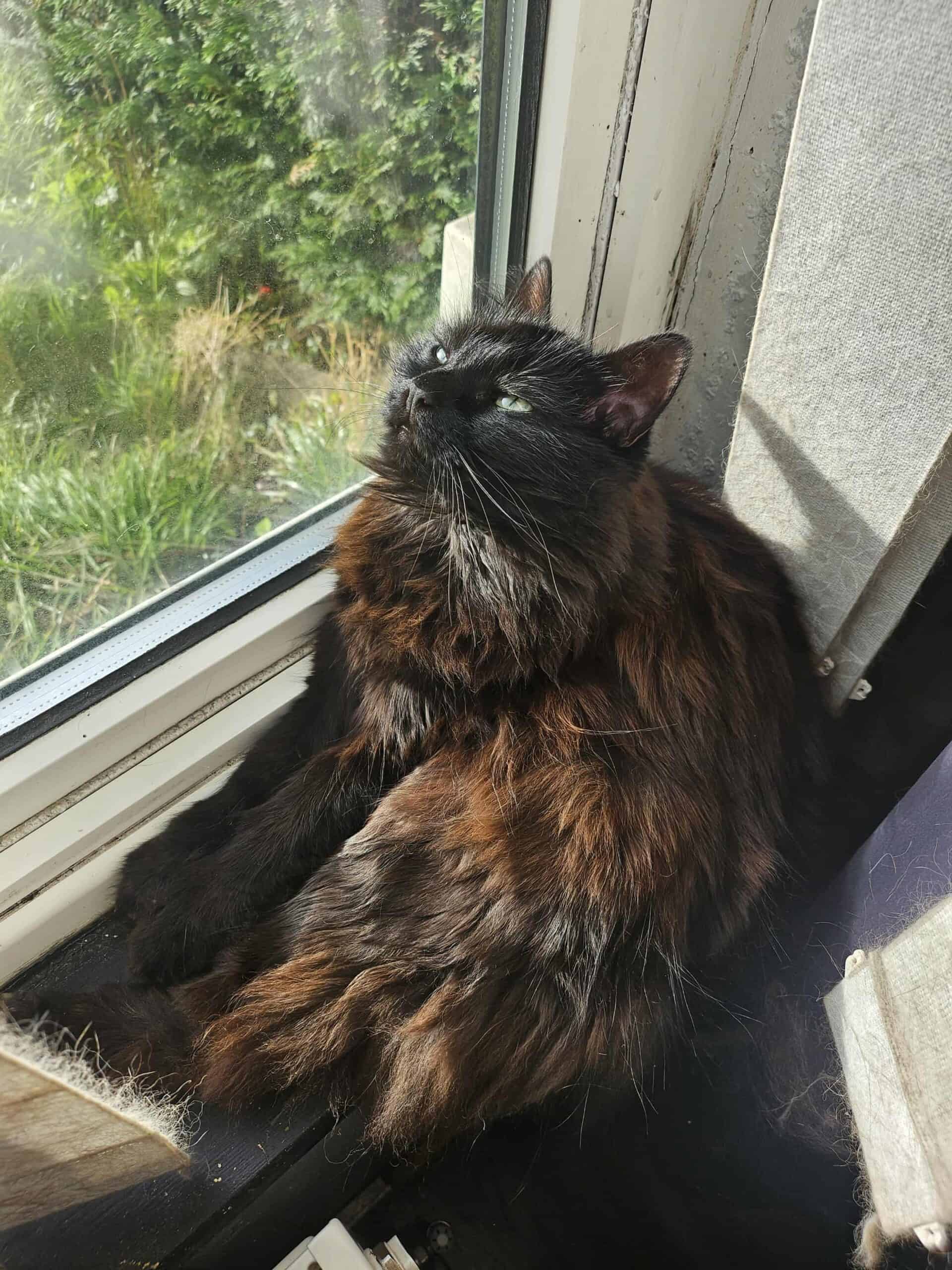
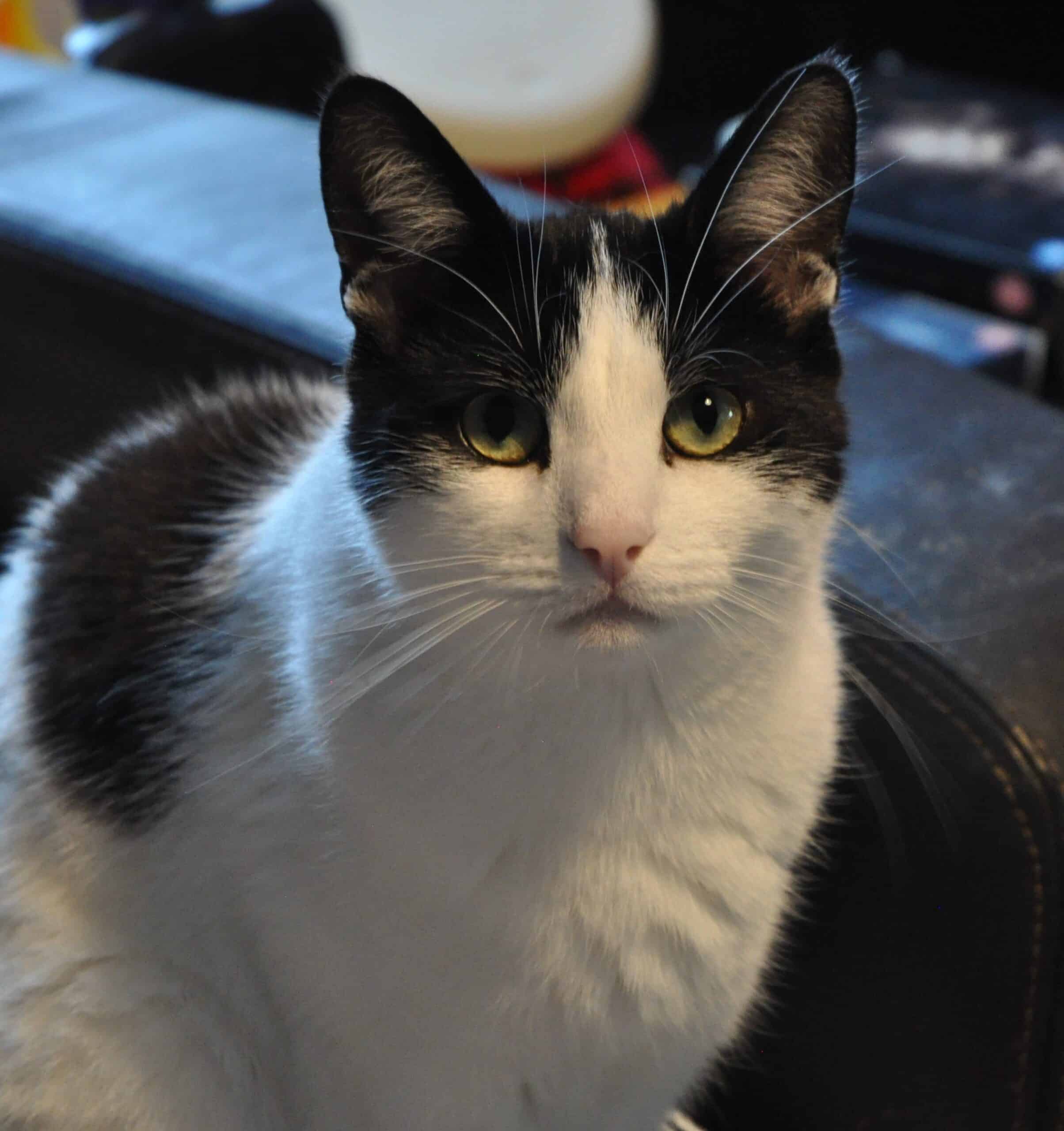
I’m an Educational Cognitive Neuropsychologist, not really a mathematician but I was able to sneak in here anyway! One of my areas of research is in math cognition, exploring how our minds comprehend numbers. I really like teaching, because I basically can’t stop talking about the things I am really interested in. I love playing videogames, listening to metal music, and I have three adorable cats
-
Read more
Hello I’m Alex! I am 32 and I live in Coventry with my wife and 3 cats (Buu, Ziggy, and Chewwie – check out below for pictures!). I have a background in cognitive neuropsychology and a doctorate in Educational Sciences. One of my main focuses of research is exploring how our minds can comprehend numbers and sizes of things, alongside how anxiety toward maths can cause problems for the way that we think. I also do some work looking at how we interact with AI, and how our internal voice can be used to make our minds more organised and effective! I mainly teach as I really like the social interactions with students, which is probably a side effects of the fact that I can never stop talking! I’m really informal and laid back, and i’m always happy to talk about anything that gives us a chance to think about the world around us.
After a day of work I like to unwind by playing video games, listening to music, and eating junk food (probably pizza!). I have recently gotten into Warhammer, and so I am learning how to paint properly. I’m not great at it, but it’s fun to learn and try new things!



-
My pronouns are:
He/Him
-
How I use Maths in my work:
I research math anxiety, which is a really common issue in schools where students learn to fear math or math classes. This interferes with them being able to do math, which then results in them doing worse, and it turns into a cycle of mental health issues. I also do statistics when I do data analysis for my experiments, it’s not the exact same as math (some people argue they are different topics at least!)
-
My Work:
My work is looking at how getting anxious about math effects the brain, as well as what we can do to trick the brain in to focusing on the task better.
-
Read more
During my PhD I was looking at creating a way to help students perform math better when they struggle with anxiety. All of the treatments for math difficulties and math anxiety involve making the student just do more math, but this isn’t always available to everyone, so I wanted to make something that was always going to be available. We took some research from our lab that said that reading instructions out loud to yourself helps you to perform better on difficult tasks, and tried to see if we could get people with math anxiety to read equations out loud and then solve them. The idea was simple, but unfortunately it didn’t work!
After this we then looked at how the mind processes numbers, we used an experiment design where we got people to judge numbers really quickly (such as if it was odd or even) and found that listening to the number being read out loud made you better at judging them compared to having to read them silently.
I have done some other work in different topics, for example I recently published a paper looking at where we can find joy in education, me and some friends talked about why we liked teaching, and some students gave us their views on what they enjoyed too. It was really fun to just explore our thoughts and write about them in an open way. Me and some of these friends have just written another paper looking at equality in education which we are hoping to publish this year!
I mainly teach psychology in my job at Coventry University. I teach on lots of different modules, including doing some statistics workshops looking at how we can explore and use data. My relationship with maths was always a bit weird, I did quite well at it in highschool, but I never really enjoyed it, even now I would say I’m not excited by the idea of math, but I also don’t dislike it. To me I always look at it like a language or a tool, it’s a way of understanding things around us and getting things done.
-
My Typical Day:
I get up in the morning and feed my cats, head into the city to run a class in the morning. After class I usually have a bunch of emails from the night before to go through. Time for lunch, I usually eat lunch around 12. In the afternoon I might have another class for a different topic, and then another couple of hours to do some preparation work for future classes or research I might want to do.
-
Read more
When I get up in the morning I have to feed my cats, after that I get ready for work and hop on the bus. My teaching schedule changes each semester, but I usually have a seminar at 9am where I run activities with students and get them to use the new knowledge they have gained from the classes they have done up to that point. After my class I need to check my emails, I have some research students who might need some advice from me about what to do with the experiment they want to run, or maybe a student from my class has a question about their essay! It’s usually time for lunch, I tend to bring something in to work like a sandwich or some macaroni cheese. After lunch I will probably have another class, similar to the one in the morning but for a different course, so I might do a class on mental health in the morning and then a class on research methods in the afternoon. After this class it’s time to head back to the office for a couple hours. This is usually the quiet part of my day as students tend to go home early after this last class. This is when I do some preparation work for future classes, or I might design my own experiment, or whatever I fancy! At the end of the day I’ve gotta go hop on a bus home, and then it’s time to chill out
-
What I'd do with the prize money:
I would work with the local education oversight authority and identify what needs there are in local schools, and use the money to help with those issues. For example, it might be cool to buy a bunch of brain models for schools so students can learn all about the different parts of the brain!
-
Education:
High School – Albany Science College
College – Runshaw College
Undergraduate, Masters & PhD – Bangor University
My highschool didn’t really offer anything that related to psychology for the most part, but I was able to gain a bunch of different skills that later translted. Knowledge of math, science, and English helped me to get my head around psychology concepts, even if I didn’t do psychology in school. I did psychology and philosophy in college which I think both helped. Unfortunately my psychology A-level was mainly memorising studies which wasn’t very good, and I find it isn’t very accurate to what psychology as a field is actually like. I like to use bits of philosophy with psychology as exploring the idea of what science is and how to question and test the world around us really interesting
-
Qualifications:
High School:
Biology – B
Chemistry – C
Physics – A
Math – B
English – B
Catering – A
Religious Education – A
Geography – B
Drama – BCollege:
Philosophy – D
Psychology – B
Religious Studies – B
Sociology – BUndergraduate –
Psychology – B (known as a 2:1)Masters –
Psychological Research – B (known as a merit)PhD –
Educational Sciences – Pass (it’s either pass or fail)
-
Work History:
I did work experience in high school as a chef in a restaurant, but it was really difficult as the work was very intense. Lots of noise, it got very hot and sweaty, and I would often cut myself whilst chopping potatoes!
In University I did a lot of jobs that involved organizing meetings for different groups of people with different hobbies;
Social Events Co-Ordinator of the Psychology Society
Chairman of the Psychology Society
Chairman of the Anime Society
Treasurer of the Baker Society
I also got a part-time job teaching a public speaking class for my university’s Psychology department
I worked in a few different research labs helping people to do their research to get work experienceBetween my Masters and PhD I got a job working in a supermarket stacking shelves, then got promoted to a department leader/manager.
In my PhD I got a number of jobs teaching a variety of psychology courses, research and statistics, and some marking work on the side
When I finished my PhD I already had a job as a university teacher, but I got another role as a lecturer in the same university but a different part. I recently moved to Coventry University where I am a lecturer in psychology
-
Current Job:
Psychology Lecturer
-
Employer:
Coventry University
-
My Interview
-
How would you describe yourself in 3 words?
math brain lecturer
What did you want to be after you left school?
A chef
Were you ever in trouble at school?
Nothing naughty, but I liked to talk a lot
If you weren't doing this job, what would you choose instead?
I would love to work with animals, maybe open a cat shelter!
Who is your favourite singer or band?
I really like metal music, at the moment i'm really into Lorna Shore
What's your favourite food?
Pizza
If you had 3 wishes for yourself what would they be? - be honest!
Enough money to live comfortably, a bigger house for my cats, unlimited pizza
Tell us a joke.
Oh I don't know... calculus jokes are too derivative and algebra jokes follow too many formulas
-